Bitter, Strong, and Unapologetic: What Really Makes a Craft Beer Bold
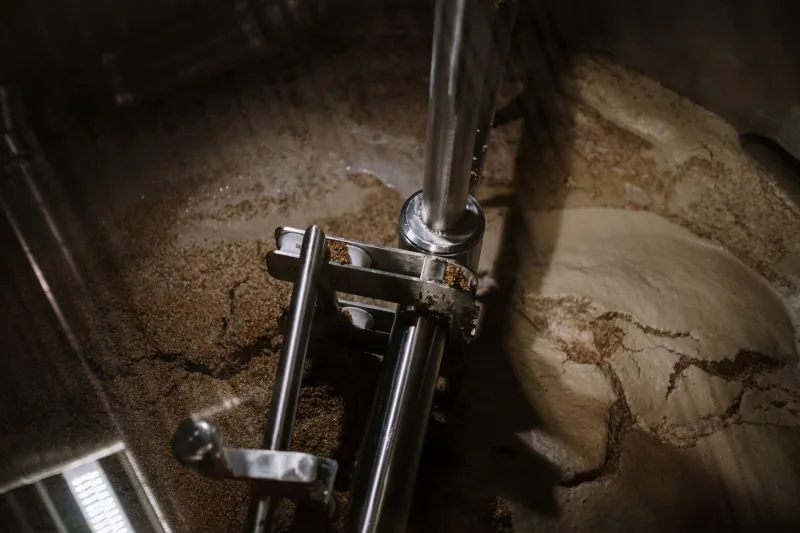
Walk into any craft taproom in America and you'll hear the word "bold" thrown around like a football on Thanksgiving. Bold flavor. Bold hop profile. Bold finish. But what does bold actually mean when it comes to what's sitting in your pint glass? Turns out, it's less about attitude and more about chemistry — and the brewers at Stein Brew Co. have spent years learning exactly how to engineer it.
What Is an IBU, Anyway?
Let's start with the basics. IBU stands for International Bitterness Unit, and it's the standard measurement used across the brewing world to quantify how bitter a beer is. The scale runs from roughly 5 (think a light lager that barely whispers bitterness) all the way past 100, where some double IPAs live that will make your face do things you didn't know it could do.
Bitterness in beer comes primarily from hops — specifically from the alpha acids that get isomerized during the boil. The longer and more aggressively you boil your hops, the more bitterness you extract. Simple enough, right? Not quite. Here's where it gets interesting: a beer with 80 IBUs doesn't always taste as bitter as one with 60 IBUs, because perceived bitterness is heavily influenced by the malt backbone, residual sweetness, and alcohol content of the finished beer.
"IBUs are just one piece of the puzzle," says Head Brewmaster at Stein Brew Co., who has been crafting recipes here since the taproom first opened. "A big imperial stout might clock in at 70 IBUs, but you'd never call it a bitter beer because the roasted malt and chocolate notes are carrying all that weight. Boldness is about the whole conversation happening in the glass, not just one variable."
The Role of Alcohol: More Than Just a Kick
Alcohol by volume — ABV — is the other heavyweight in this equation. And while plenty of drinkers associate high ABV with boldness, the relationship is more nuanced than that. Alcohol contributes what brewers call "body" and "warmth." At higher concentrations, ethanol amplifies certain flavor compounds, carries aroma molecules more effectively, and creates that slow-building heat you feel in the back of your throat after sipping a well-made barleywine or Belgian quad.
For reference, your average American lager sits around 4–5% ABV. A session IPA might land at 4.5%. But get into double IPAs, imperial stouts, or strong ales and you're routinely looking at 8–12%, sometimes higher. Each percentage point isn't just more alcohol — it's a fundamentally different drinking experience.
At Stein Brew Co., the brewing team approaches ABV as a tool rather than a goal. "We don't brew high-ABV beers just to brag about the numbers," notes one of our recipe developers. "We push alcohol up when the style calls for it, when it's going to add something real to the flavor profile. Otherwise, you're just making something boozy for no good reason."
Balancing Act: The Art Behind the Numbers
Here's where craft brewing separates itself from industrial production: the deliberate, sometimes obsessive pursuit of balance. A 90-IBU double IPA that lacks sufficient malt sweetness tastes like you're chewing on a pine branch. An 11% ABV imperial stout with no bitterness to cut through the sweetness becomes cloying and exhausting after half a glass.
The great bold beers — the ones that stick in your memory and bring you back for another pour — are the ones where bitterness, sweetness, alcohol heat, carbonation, and aroma all exist in a kind of productive tension. Nothing is trying to dominate. Everything is earning its place.
Our brewmasters at Stein Brew Co. use a concept they call "intentional contrast." When building a new recipe, they map out where the beer's intensity peaks and where it softens. A West Coast IPA might hit you with a sharp, resinous bitterness upfront, then open into a clean, dry finish with just a hint of citrus. That contrast — aggressive then elegant — is what makes it memorable.
A Quick Tasting Guide: Reading Boldness in the Glass
Not sure how to identify boldness when you're sitting at the bar? Here's a simple framework:
Color and clarity: Darker beers (stouts, porters, ambers) tend to signal malt-forward boldness. Hazy or golden beers often signal hop-forward intensity. Neither is more or less bold — they're just different.
Aroma: Take a slow sniff before you sip. Bold beers announce themselves. You might get pine, citrus, roasted coffee, dark chocolate, caramel, or tropical fruit — sometimes several at once. If the aroma is quiet, the beer probably is too.
First sip: Notice where the flavor hits first. Front-of-palate bitterness? That's hops. A wave of sweetness that builds? That's malt. A warming sensation that spreads slowly? Hello, ABV.
Finish: Bold beers linger. The finish on a well-made double IPA or imperial stout can last 30 seconds or more. That persistence is by design.
Carbonation: Higher carbonation can amplify perceived bitterness. Lower carbonation lets malt and alcohol flavors breathe. Pay attention to the bubbles — they matter more than you'd think.
Why We Chase Bold at Stein Brew Co.
Our tagline — Crafted Bold. Poured with Purpose — isn't just something we slapped on a can. It's a genuine philosophy that guides every recipe we develop. Bold doesn't mean reckless. It means intentional. It means we made a decision about what this beer should taste like, and we had the confidence to follow through on it.
Craft beer in America has exploded precisely because drinkers got tired of being handed something safe and forgettable. They wanted beers that had opinions. And that's exactly what IBUs, ABV, and skilled brewing science allow us to deliver — liquid opinions, poured fresh, waiting for yours.
Next time you're at the taproom, ask your bartender about what's bold on the board. Then ask why. We promise it'll be a conversation worth having.