Raise a Glass to History: How Beer Steins Went From Barroom Staple to Coveted Keepsake
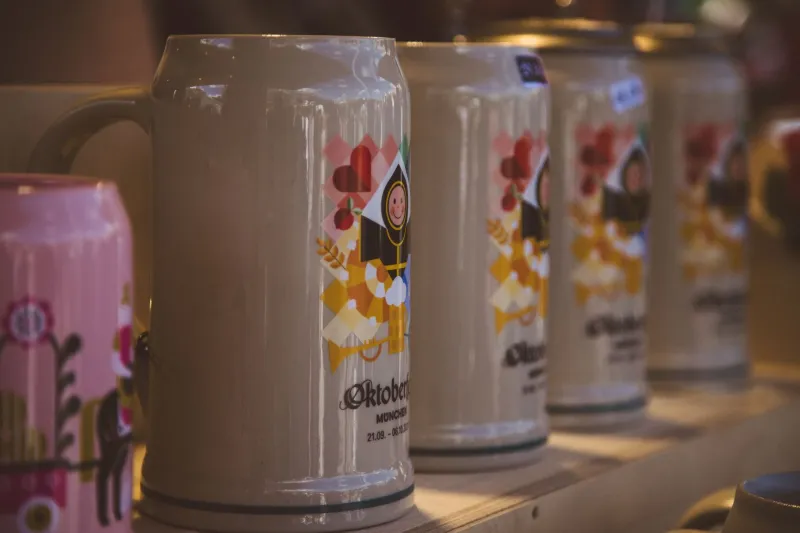
There's a stein on a shelf in Mark Hendricks' living room in Cincinnati that he refuses to drink from. Not because it's fragile — though at nearly 200 years old, he's careful — but because he figures it's already done enough work. "That thing has probably held more beer than I ever will," he says with a laugh. "It deserves a rest."
Hendricks is one of a growing number of craft beer enthusiasts who have crossed the line from casual drinker to serious stein collector. What was once a niche hobby tucked inside dusty antique shops is now a full-blown subculture, fueled in part by the craft beer movement's deep love of history, craftsmanship, and community identity. And increasingly, American breweries are getting in on the action — commissioning limited-edition steins that give their most loyal fans something tangible to hold onto long after the keg kicks.
A Brief History of the Stein (And Why the Lid Matters)
The word stein is actually shorthand for Steinzeugkrug, German for stoneware jug. These vessels became widespread in 14th- and 15th-century Europe, partly as a response to the bubonic plague — lids were added to keep insects (and worse) out of communal drinking vessels. Practical origins, sure, but artisans quickly turned them into canvases.
By the 19th century, German craftsmen in regions like the Westerwald and Bavaria were producing elaborately decorated steins featuring relief scenes of hunting parties, village festivals, guild symbols, and royal crests. These weren't just mugs. They were status objects, gifts, and storytelling devices passed down through families.
That tradition never fully disappeared. It just went underground for a few decades — until craft beer culture gave it a reason to resurface.
The Collector's Mindset
Ask any serious stein collector what got them started, and you'll usually hear one of two stories: either they inherited a piece from a grandparent, or they stumbled across something at a flea market that stopped them cold.
For Karen Albrecht, a collector based outside of Milwaukee, it was the latter. "I found a Mettlach stein at an estate sale about twelve years ago," she says. "I paid fifteen dollars for it. Took it home, looked it up, and nearly fell out of my chair." Mettlach, produced by the Villeroy & Boch factory in Germany beginning in the 1800s, is considered among the most desirable names in antique stein collecting. Certain pieces regularly sell at auction for thousands of dollars.
Albrecht now owns over 300 steins, ranging from mass-produced German tourist pieces to hand-thrown American art pottery. She's also a member of Stein Collectors International, an organization founded in 1965 that remains active today with chapters across the US. "People think this is some old-man hobby," she says. "But I've seen a real influx of younger collectors in the last five or six years. Craft beer people, mostly. They care about the story behind what they're drinking."
That connection to narrative is everything. Craft beer has always been as much about identity as flavor — about where you're from, what you value, who made this thing and why. A well-chosen stein carries the same weight.
American Breweries Are Writing Their Own Stein Stories
Some of the most exciting developments in the stein world right now aren't coming out of Bavaria. They're coming out of taprooms in Vermont, Colorado, Oregon, and right here in the American heartland.
A handful of forward-thinking craft breweries have started commissioning limited-edition steins — often hand-crafted by local potters or small-batch manufacturers — as anniversary pieces, seasonal releases, or membership rewards. The result is something that functions as both drinkware and a kind of wearable brand loyalty badge. Except you don't wear it. You display it.
One brewer in Asheville, North Carolina, started offering hand-thrown ceramic steins as part of their mug club program three years ago. Each year's design is different, and retired designs have already started showing up on resale sites for two to three times their original price. "We didn't set out to create a collectible," the head brewer admits. "We just wanted to give our regulars something they'd actually keep. Turns out people keep them and trade them."
This kind of community-driven scarcity is something the craft beer world understands intuitively. Limited releases, local sourcing, small batches — the same logic that makes a double dry-hopped IPA feel special applies equally to the vessel you pour it into.
What Makes a Stein Worth Collecting?
If you're thinking about starting a collection — or you already have a shelf of steins you haven't thought much about — there are a few things worth knowing.
Age and origin matter, but they're not everything. Antique German steins from established makers like Mettlach, Marzi & Remy, or HR Reinhold carry built-in provenance. But American art pottery steins from the early 20th century — pieces from Rookwood, Weller, or Roseville — are equally sought after and often more accessible.
Condition is king. A hairline crack or a chipped lid can cut a stein's value significantly. Lids, in particular, are vulnerable — many antique steins have been separated from their original hardware over the decades, which affects both aesthetics and price.
Rarity and storytelling add value. A stein made for a specific guild, regiment, or brewery anniversary carries more weight than a generic decorative piece. The same principle applies to modern limited editions: the fewer produced, the more they'll mean to future collectors.
Buy what you love. Every serious collector says this eventually. The market for antique steins can be unpredictable, and trends shift. But a piece that genuinely moves you — because of its craftsmanship, its history, or its connection to a beer you love — will always be worth something to you.
More Than Drinkware
There's something fitting about the fact that stein collecting has found a natural home in craft beer culture. Both are about slowing down, paying attention, and honoring the people and processes behind the thing in your hand. Both push back, gently, against the idea that everything is disposable.
Mark Hendricks, back in Cincinnati, puts it simply. "When I pick up that old stein, I'm not just holding a cup. I'm holding somebody's craft. Somebody made that thing carefully, and somebody else valued it enough to keep it for two centuries." He pauses. "That's what we're trying to do with good beer, too, right? Make something worth keeping."
We think so. Cheers to that.