Your Glass Is Doing More Than You Think: The Real Science Behind Beer Vessel Design
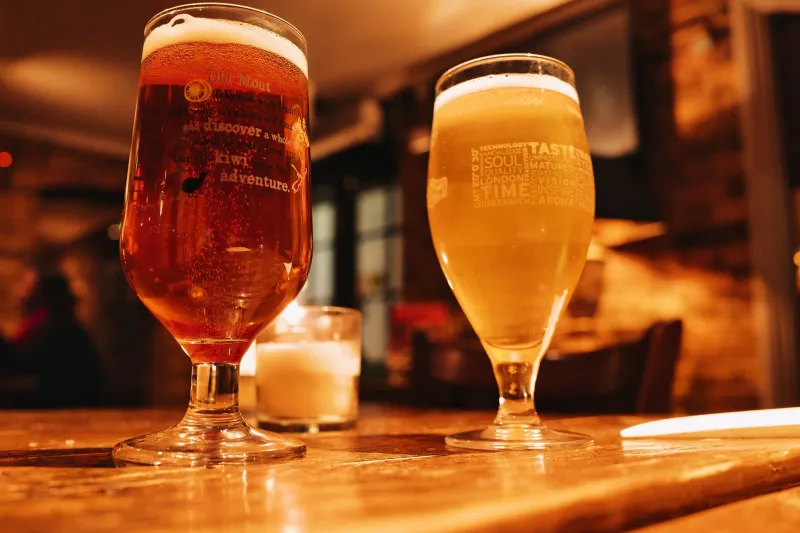
Most of us have grabbed whatever clean glass was nearest and poured a cold one without giving it a second thought. And honestly, no judgment — beer tastes pretty great out of a mason jar on a hot summer afternoon. But if you've ever wondered why your favorite craft IPA somehow hits different at a taproom than it does at home, the answer might not be the beer itself. It might be the glass.
At Stein Brew Co., the name isn't just branding — it's a nod to the deep, often underappreciated relationship between a great beer and the vessel that holds it. So let's get into the actual science of why glass shape matters more than most drinkers realize.
Aroma Is Half the Flavor — And Your Glass Controls It
Here's something sensory scientists love to point out: humans perceive somewhere between 70 and 80 percent of what we call "flavor" through our sense of smell. Taste receptors on your tongue can only detect basic sensations — sweet, sour, bitter, salty, umami. Everything else? That's aroma doing the heavy lifting.
This is where glass geometry becomes genuinely fascinating. A tulip-shaped glass, for example, has a wider bowl that allows volatile aromatic compounds — the stuff responsible for citrus, pine, floral, and tropical notes — to off-gas from the beer's surface. But the glass then curves inward at the rim, funneling those aromatics directly toward your nose as you drink. You're essentially getting a concentrated burst of scent with every sip.
Contrast that with a standard shaker pint — the ubiquitous straight-sided glass you'll find at most American bars. It's cheap, stackable, and durable. It's also, from a sensory standpoint, one of the least ideal vessels for experiencing a craft beer. The straight walls let aromatics dissipate outward rather than directing them toward your nose. You lose a significant portion of the sensory story the brewer worked hard to tell.
"We spend months dialing in hop profiles, adjusting dry-hop rates, tweaking fermentation temps — all to build a specific aromatic experience," said one Midwest-based brewmaster who has been crafting IPAs and Belgian ales for over fifteen years. "And then someone hands it to a customer in a shaker pint. It's like painting a mural and hanging it in a closet."
Temperature Retention: The Slow Burn of Good Design
Beyond aroma, glass shape and material directly affect how quickly your beer warms up — and temperature has a massive impact on flavor perception.
Thicker glass and wider surface areas accelerate heat transfer from your hand into the beer. Traditional German steins, often made from thick ceramic or heavy glass with a handle, were actually engineered partly for this reason: the handle keeps your warm hand away from the vessel's body, slowing the warming process. That's practical thermal engineering that dates back centuries.
On the flip side, some beer styles actually benefit from a gentle warm-up. Big, complex Belgian quads or imperial stouts are often served slightly below room temperature so that as they warm in the glass, new flavor compounds become volatile and reveal themselves. A thinner-walled goblet or snifter encourages this gradual evolution in a way a thick mug doesn't.
For lagers and pilsners — styles where crisp, clean, cold delivery is the whole point — a tall, slender Pilsner glass does double duty. Its narrow body minimizes surface area exposure to ambient warmth, and its length showcases the beer's clarity and carbonation visually. That visual element isn't trivial either; researchers in sensory science have documented that the appearance of a beer, including its color and bubble activity, primes the brain's flavor expectations before the first sip even lands.
Carbonation, Nucleation, and the Bubble Effect
Speak of bubbles — they're not just aesthetic. Carbonation carries aromatic compounds from the liquid to the surface, acting as a kind of internal delivery system for flavor. The rate at which CO2 escapes is influenced by the shape of the glass and, interestingly, tiny imperfections or etchings on the interior surface.
Many quality craft beer glasses have laser-etched nucleation points at the bottom — small rough patches that continuously seed bubble formation. This keeps the beer lively in the glass, maintains the head, and sustains that steady aromatic release throughout your drinking experience rather than front-loading it all at the pour.
A weizen glass — tall, curved, and wide at the top — is designed specifically for hefeweizens and wheat beers, styles known for their voluminous, persistent foam. The extra height accommodates that dramatic head while the wide mouth invites the banana and clove esters characteristic of the style to bloom outward.
Matching Glass to Style: A Practical Guide
You don't need a cabinet full of specialty glassware to drink craft beer well, but a few key pieces go a long way. Here's a simple starting framework:
- IPAs and Pale Ales: Reach for a tulip or IPA-specific glass. The inward curve at the rim concentrates hop aromatics right where you want them.
- Stouts and Porters: A snifter or tulip works beautifully, encouraging the roasty, chocolatey, and coffee-like aromas to concentrate. The wide bowl also warms the beer slightly in your hands, which opens up complexity.
- Lagers and Pilsners: A tall Pilsner glass or a classic stein keeps things cold and showcases clarity and carbonation.
- Belgian Ales and Saisons: A goblet or chalice, with its wide mouth and stemmed base, is designed for high-carbonation, aromatic styles. The stem keeps hand warmth away from the beer while the open rim lets effervescent aromatics rise freely.
- Wheat Beers: The tall weizen glass is purpose-built for this style. Don't fight it.
Why It All Comes Back to Intention
Craft brewing is, at its core, an act of intention. Every grain bill, every hop addition, every fermentation decision is made with a specific outcome in mind — a flavor profile the brewer is trying to communicate. Glassware is the final step in that communication chain, the last variable between the brewer's vision and your experience.
At Stein Brew Co., we think about that chain a lot. The stein itself — sturdy, purposeful, built to hold and to keep — is a symbol of taking the drinking experience seriously without taking it too seriously. It's not about pretension. It's about getting the most out of something that someone worked hard to make.
So next time you crack open something special, take an extra ten seconds to find the right glass. Your nose will thank you. Your palate will thank you. And somewhere, a brewer will have no idea why, but they'll feel quietly vindicated.