Poured in Place: How Regional Breweries Are Turning Custom Steins Into Their Most Powerful Brand Statement
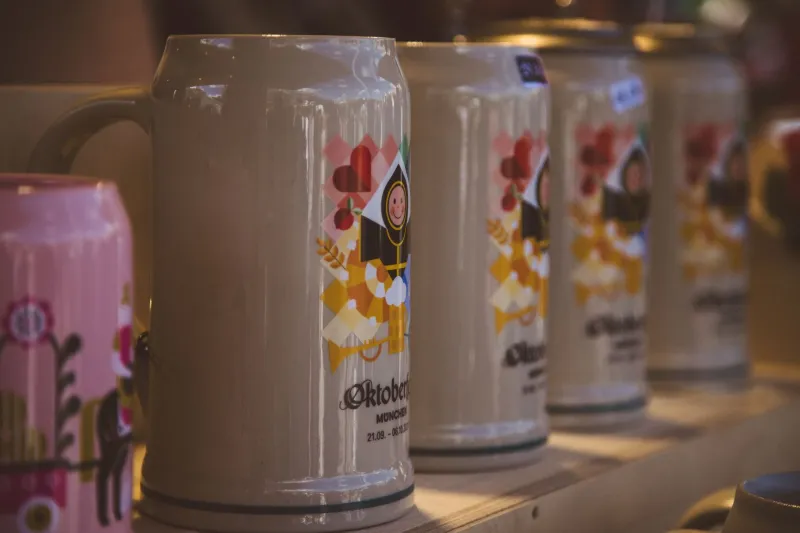
Walk into a well-loved craft taproom and you'll notice something almost immediately. It's not just the smell of roasted malt or the low hum of conversation — it's the look of the place. The tap handles, the chalkboard menus, the worn wooden bar. And increasingly, it's the vessels sitting in front of every customer. Not generic pint glasses stamped with a macro logo, but something made specifically for this room, this beer, this community.
Custom steins are having a serious moment in American craft brewing, and it's not just about aesthetics. Breweries from Portland, Oregon to Asheville, North Carolina are commissioning one-of-a-kind drinking vessels that function as wearable — or rather, holdable — brand manifestations. The stein, it turns out, is one of the most intimate pieces of marketing a brewery can produce.
More Than Merch: When a Vessel Becomes a Statement
For a long time, branded glassware meant slapping a logo on a tulip glass and calling it a day. That era is fading fast. What's replacing it is something closer to craft object design — deliberate, locally influenced, and built to last.
Take a brewery like Ridgeline Ferment House in Flagstaff, Arizona. Their custom ceramic steins feature hand-painted images of the San Francisco Peaks, crafted by a local Flagstaff ceramicist who also happens to be a regular. The collaboration started almost by accident — the brewer and the artist got talking over a pint — and now those steins are the first thing out-of-towners ask about when they visit the taproom. They're not cheap to produce, but they've become the brewery's most requested piece of merchandise.
"We didn't set out to create something iconic," says the head brewer. "We just wanted something that felt like us. And it turned out that when something feels genuinely local, people connect with it in a way that no amount of Instagram content can replicate."
The Design Process: Function Meets Folklore
Designing a custom stein isn't just an artistic exercise — it's an engineering one too. The weight of the vessel, the thickness of the walls, the angle of the handle, the interior volume — all of these factors affect how the beer tastes and how the drinker experiences it. A well-designed stein keeps a lager cold longer. A wider mouth lets the aromatics of a wheat beer bloom before the first sip. The shape isn't decoration; it's function.
Breweries working with ceramicists and glassblowers often go through multiple prototype rounds before landing on a final design. Some commission lidded steins with pewter or wood tops that nod directly to German brewing tradition. Others go for something more regionally specific — a Pacific Northwest brewery might work with a local woodworker to create handles from reclaimed timber, while a Texas hill country operation might incorporate hand-thrown stoneware that echoes the clay soils of the region.
The design conversation also forces breweries to get specific about their identity in ways that a marketing brief never quite does. What does your beer actually stand for? Who are your people? What does your neighborhood look like, smell like, feel like at 6 p.m. on a Friday?
"When you're designing something someone's going to hold in their hand for two hours," says one ceramic designer who has worked with several Midwest craft breweries, "you have to think about the whole experience. The weight, the warmth, the texture. It's tactile storytelling."
The Loyalty Loop: Stein Programs That Build Community
Beyond the branding upside, custom steins are proving to be one of the most effective customer loyalty tools in the craft beer playbook. Stein clubs — where regulars pay an annual fee to have their personal stein hung on the wall and filled at a slight discount — have been a staple of German-style beer halls for decades. American craft breweries are adapting the model and making it their own.
At a taproom in Milwaukee's Walker's Point neighborhood, the stein club has grown to over 200 members in just two years. Members get their name engraved, their stein stored on a dedicated rack behind the bar, and access to first pours of seasonal releases. The social dynamic it creates is real — regulars recognize each other's steins, newcomers ask questions, and the bar staff knows exactly who's who before a word is spoken.
"It turns a transaction into a relationship," says the taproom manager. "People aren't just coming in to buy a beer. They're coming in to get their beer, in their stein, at their spot. That sense of belonging is something you can't manufacture."
For the brewery, the economics are compelling too. A custom stein program generates upfront revenue, reduces glassware loss (people don't walk off with steins the way they do pint glasses), and creates a visual display in the taproom that functions as living, breathing advertising every time a regular walks in with their mug.
Small Batch, Big Impact
Not every brewery has the budget to commission hand-thrown ceramics for their entire customer base. But the custom stein movement isn't limited to well-funded operations. Plenty of smaller brewpubs are finding creative, affordable ways to get in on the action — working with local art students, partnering with nearby pottery studios, or releasing limited-run seasonal steins that double as collectibles.
The limited-edition angle is particularly smart. When a brewery releases 100 custom steins tied to a specific seasonal beer — say, a winter warmer served only in a hand-glazed mug with a snowflake motif — scarcity does the marketing work for them. People line up. Photos get posted. The stein becomes a badge of having been there, of being in the know.
It's the same impulse that drives sneaker culture, limited vinyl pressings, and craft whiskey bottle collecting. People want objects that mean something, that connect them to a place and a moment. A custom stein can do all of that while also holding a really good märzen.
The Bigger Picture
What the custom stein movement ultimately reflects is something larger happening in American craft brewing — a shift away from the idea that beer is just a beverage and toward the understanding that it's an experience, a culture, a community anchor.
The breweries leaning hardest into custom vessels are the ones that have figured out that their most loyal customers aren't just buying beer. They're buying belonging. And when you hand someone a stein that was designed for this place, by people who love this place, you're giving them something they can hold onto — literally and otherwise.
At Stein Brew Co., we've always believed that what you drink from matters. Turns out, a lot of breweries across the country are starting to agree. And the results — in craft, in community, and in the quiet pride of lifting something beautiful to your lips — are worth raising a glass to.