Stop Settling for Nachos: The Unexpected Food Pairings That Make Great Beer Even Better
Let's be honest — most of us have been phoning it in when it comes to food and beer. You crack open something bold and beautifully crafted, then reach for whatever's closest: a bag of chips, a frozen pizza, or the same old pub burger you've ordered a hundred times. Nothing wrong with any of that. But if you're drinking something your brewer spent weeks perfecting, it might be worth giving the food side of the equation a little more thought.
At Stein Brew Co., we've spent a lot of time exploring how our beer lineup interacts with regional cuisine, local restaurant partnerships, and the kind of home cooking that actually happens on a Tuesday night. What we've found is that the old rules — dark beer with red meat, light beer with fish — are a starting point, not a finish line. Some of the most interesting combinations break those rules entirely.
Why Pairing Actually Matters (And It's Not Pretentious)
Here's the short version of the science: beer and food share aromatic compounds. When those compounds overlap or contrast in just the right way, both the food and the beer taste more like themselves. A hoppy IPA can make a fatty dish feel lighter and more refreshing. A malty amber ale can echo the caramelized edges of roasted vegetables. A sour ale can do for a rich cheese board what a squeeze of lemon does for fried chicken.
The goal isn't to follow a rulebook. It's to understand a few basic principles — complement, contrast, and cut — and then experiment freely.
Complement means matching similar flavor profiles. Think roasted coffee notes in a stout alongside a dark chocolate brownie.
Contrast means using opposing flavors to create balance. A sweet wheat beer can cool down the heat of spicy Thai food in a way that feels almost magical.
Cut means using carbonation and bitterness to cleanse the palate. This is why a crisp pilsner works so well with something rich and creamy — it literally scrubs your tongue clean between bites.
Once you've got those three ideas in your head, the whole game opens up.
Beyond the Burger: Pairings Worth Trying
IPAs and Indian Cuisine
This one surprises people, but it's become one of our go-to recommendations at the taproom. The resinous, citrusy bitterness of a well-built IPA doesn't fight with the spice in dishes like chicken tikka masala or a lamb vindaloo — it actually harmonizes with it. The bitterness acts as a counterweight to the richness of the sauce, while the citrus notes in the hops bounce off the brightness of ginger and coriander. Try it with a West Coast IPA and a good naan on the side. You won't go back to water.
Saison and Soft Cheese or Charcuterie
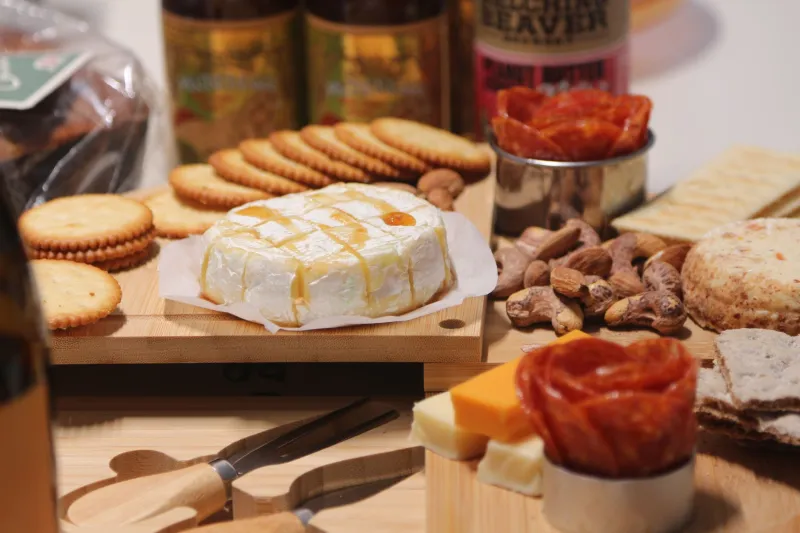
Saisons were brewed by Belgian farmworkers for a reason — they were meant to be consumed alongside a working meal. The peppery, earthy, slightly funky character of a saison makes it a natural partner for soft cheeses like brie or camembert, cured meats, and pickled vegetables. The carbonation lifts the fat and salt, and the subtle fruitiness in a good saison plays nicely against a honeyed mustard or a fig jam. This is the move for your next backyard gathering.
Stout and Oysters (Yes, Really)
This pairing has history behind it — Guinness and oysters have been a thing in Ireland for centuries — but it still catches people off guard. The briny, oceanic quality of a fresh oyster and the roasted, slightly bitter depth of a dry stout create a contrast that's genuinely stunning. The saltiness of the oyster amplifies the malt sweetness in the beer, and the beer's carbonation cleans up the mineral finish of the shellfish. If you're anywhere near a coastal seafood spot, try this at least once.
Wheat Beer and Mexican Street Food
A hefeweizen or American wheat beer — with its banana and clove esters, soft body, and gentle carbonation — is one of the most versatile food beers out there. It's practically built for street tacos, elote, and ceviche. The soft sweetness of the malt doesn't compete with lime or cilantro, and the lighter body keeps everything feeling fresh even when you're working through a plate of al pastor. This is also one of the better pairings for vegetarian Mexican dishes, where you want the beer to support rather than overpower.
Smoked Porter and BBQ (But Not the Way You Think)
Okay, smoked beer and BBQ sounds obvious. But here's the twist: skip the brisket and try a smoked porter alongside pulled pork with a vinegar-based Carolina sauce. The smokiness in the beer echoes the low-and-slow cooking, while the acidity of the sauce cuts through the porter's richness and keeps the whole thing from becoming too heavy. It's a regional American combination that feels purpose-built, even though most people haven't tried it.
A Few Rules We Actually Like
For all the rule-breaking, there are a couple of guidelines that hold up pretty consistently.
Intensity should match. Delicate beers get lost next to bold, heavily spiced food. Big, assertive beers can bulldoze subtle dishes. Try to pair beers and foods that are in the same weight class.
Local is almost always a good idea. Regional cuisines and regional beers often share ingredients and traditions. A Pacific Northwest IPA alongside Pacific salmon makes sense not just culturally but flavor-wise. A Texas-style amber ale alongside smoked brisket? Same idea.
Don't overthink the dessert course. A slightly sweet, lower-alcohol beer — a brown ale, a milk stout, a fruit wheat — often works better with dessert than you'd expect. The bitterness in even a mildly hopped beer can make chocolate taste more complex and caramel taste more layered.
Try It at Home (Or Come See Us)
The best way to develop your own pairing instincts is to experiment without pressure. Pick up a mixed six-pack, cook something you actually enjoy eating, and pay attention to what happens when the two meet. Sometimes it's a revelation. Sometimes it's a miss. Either way, you learn something.
When you're at the taproom, don't hesitate to ask your server what's been working well with whatever's on tap. We keep tabs on what our guests are loving — and we've got some strong opinions about which of our current pours belong next to which dishes from our local culinary partners.
Great beer is already doing a lot of work in the glass. Give it a worthy partner on the plate, and the whole experience gets better for both of them.