Cold, Warm, or Just Right: Why Your Beer's Temperature Is the Hidden Ingredient
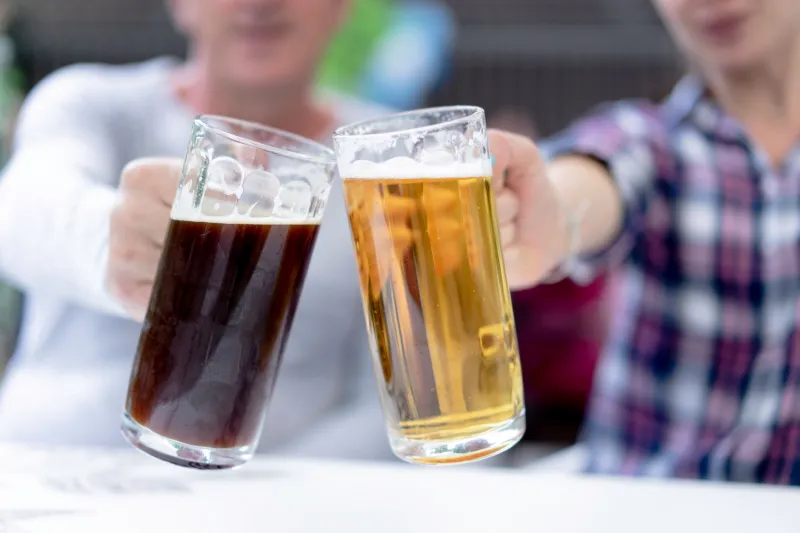
There's a reason your favorite craft brewery doesn't just slap every beer on ice and call it a day. Temperature is one of the most underappreciated variables in the entire drinking experience — and once you understand it, you'll never look at your glass (or your stein) the same way again.
We talk endlessly about IBUs, ABV, grain bills, and dry-hopping schedules. But the moment a beer leaves the tap and hits your chosen vessel, a whole new set of chemistry kicks in. And that chemistry is almost entirely driven by heat — or the lack of it.
Why Temperature Is a Flavor Dial, Not Just a Comfort Setting
Here's the basic science: aroma compounds in beer are volatile, meaning they evaporate and travel toward your nose. The warmer a liquid gets, the more freely those compounds move. Serve a beer too cold, and you're essentially locking those aromatics in place — your nose gets almost nothing, and your palate follows suit.
Serve it too warm, though, and the balance tips the other way. Off-flavors that were masked at cooler temps start announcing themselves. Fusel alcohols — the kind that give you that harsh, hot sensation — become more pronounced. A beer that tasted clean and balanced at 45°F can suddenly taste boozy and rough at 65°F.
The sweet spot varies dramatically by style, and that's where things get genuinely interesting.
Every Style Has Its Own Comfort Zone
Light lagers and pilsners are built for the cold — somewhere between 38°F and 45°F is their wheelhouse. That crispness, that snap of carbonation, those subtle floral or grassy notes? They need the chill to stay in check. Push a pilsner too warm and it turns flabby fast.
American IPAs and West Coast-style pale ales tend to shine a bit warmer, around 45°F to 50°F. That extra degree or two opens up the citrus, pine, and tropical aromatics that make these beers so expressive. If you're drinking your IPA straight from a nearly frozen mug, you're probably missing half the experience the brewer intended.
Then there's the big, complex stuff — Belgian tripels, imperial stouts, barleywines, sour ales aged in wood. These are the beers that genuinely reward patience. Served between 50°F and 60°F, they reveal layer after layer: dried fruit, vanilla, dark chocolate, leather, funk. Crack one open straight from the fridge and it tastes like a rough draft of itself.
Enter Thermal Mass — and the Case for Your Stein
This is where traditional stoneware and ceramic beer steins stop being just a cool aesthetic choice and start being a legitimate performance tool.
Thermal mass refers to a material's ability to absorb and hold heat (or cold) over time. Thin glassware has very little of it — the temperature of whatever you're drinking shifts rapidly based on your hand, the ambient air, and the table surface. That pint glass you're holding? It starts warming your beer almost immediately.
A thick ceramic or stoneware stein is a different animal entirely. The dense material absorbs temperature slowly and releases it slowly. If you pre-chill your stein, it holds that cold far longer than glass. If you're serving a room-temperature Belgian ale, the stein doesn't spike the temp the way a thin vessel might. It acts as a buffer — a thermal stabilizer — giving you a longer, more consistent drinking window.
That consistency matters because flavor isn't static. As a beer warms even a few degrees, the perception of bitterness, sweetness, and carbonation shifts. Drinking from a vessel that holds temperature steady means you're tasting the beer closer to how it was designed to be experienced, from the first sip to the last.
The Muting Effect of Going Too Cold
One of the most common flavor killers in American beer culture is over-chilling. Freezer mugs. Ice-cold taps. Bars that keep their walk-ins cranked way down. These aren't just neutral choices — they actively suppress what's in the glass.
Carbonation, for instance, becomes more aggressive at colder temperatures, which can overwhelm subtler flavors. Bitterness gets blunted. Malt sweetness, which provides backbone and balance, nearly disappears. What you're left with is essentially a cold, fizzy beverage — which is fine if that's all you want, but a shame if you're drinking something with actual craft behind it.
A well-made craft IPA or a carefully brewed amber ale has a flavor architecture. Serve it too cold and you're essentially looking at that architecture through frosted glass.
How to Start Drinking Smarter
You don't need a lab thermometer to improve your experience (though they're cheap and kind of fun). A few practical habits go a long way:
Match the vessel to the style. Light, cold-served lagers work fine in standard glassware. But if you're cracking open a complex stout or a Belgian golden strong, pull out the stein. The thermal mass will serve you well.
Pre-chill with intention. If you want your beer cold, chill the vessel — not just the beer. A cold stein keeps things cold without shocking the carbonation the way ice does.
Give big beers a few minutes. Pull that imperial stout or barleywine from the fridge and let it sit for five to ten minutes before drinking. You'll taste a completely different beer.
Pay attention to the transition. Some of the best moments in a complex beer happen as it warms. Take a sip early, then revisit it ten minutes later. The difference can be remarkable.
The Brewer's Intention Lives in the Temperature
Every craft brewer makes choices — about ingredients, about process, about time. Those choices are encoded in the finished product, waiting to be unlocked by the right conditions. Temperature is one of the keys.
At Stein Brew Co., we think about this stuff constantly. The beers we make are meant to be experienced fully — not muted by a freezer mug or rushed with a warm hand wrapped around thin glass. The right vessel, at the right temperature, is the final step in the brewing process. It just happens to be yours to take.
So next time you pour something worth drinking, give it a little thought. The flavor you've been missing might just be a few degrees away.