What's in Your Hand Changes What's in Your Glass: The Vessel-First Brewing Revolution
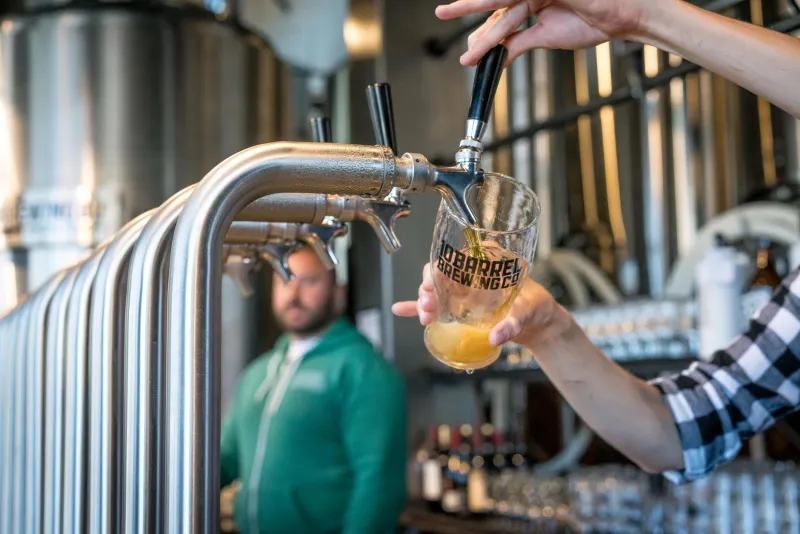
There's a question that doesn't get asked enough in craft brewing circles: what are people actually drinking this out of?
For most of brewing history, that question barely registered. You made the beer. You put it in something. People drank it. End of story. But a growing wave of American craft brewers is turning that logic completely on its head — and the results are changing what ends up in your pint.
The Vessel Is Part of the Recipe
Walk into any serious taproom these days and you'll notice the glassware has gotten intentional. Tulip glasses for Belgian-inspired ales, wide-mouthed snifters for barrel-aged stouts, and yes — heavy ceramic steins for the kind of malt-forward lagers that demand something with a little weight behind them.
That intentionality isn't just aesthetic. It's functional, and increasingly, it's influencing what goes into the beer itself.
"I started thinking about vessel design almost like an ingredient," says one Midwest brewmaster who's been crafting lagers and German-style ales for over a decade. "A thick stein keeps the beer cold longer, mutes some of the finer aromatic notes, and puts more emphasis on mouthfeel and body. So if that's how people are going to drink it, I'd better brew something that rewards that experience — something bold, something assertive, something that doesn't need you to sniff it like a wine before you take a sip."
That's the stein effect in a nutshell: the physical properties of a drinking vessel create a sensory context, and smart brewers are engineering their recipes to meet that context head-on.
Thin Glass, Delicate Sips, Different Demands
Flip that logic around and you get an equally compelling case on the other end of the spectrum. Thin-walled glassware — the kind you'd find paired with a hazy IPA or a dry-hopped pilsner — conducts heat quickly, warms the beer faster, and opens up volatile aromatic compounds in a way that a thick mug simply can't.
Brewers who design for that format are thinking about their recipes differently. They're chasing top-of-the-hop aromatic precision. They're dialing in dry-hop additions to bloom at exactly the temperature a thin glass will reach after five minutes in your hand. They're obsessing over clarity and color because the glass shows everything.
"With a thin-walled glass, you're essentially asking the drinker to engage on a sensory level that's almost meditative," explains a Pacific Northwest brewer known for her single-origin hop projects. "Every sip should reveal something new as the beer warms. That requires a completely different approach to recipe development than something you're going to crush out of a stein at a backyard cookout."
Neither approach is better. They're just honest about what they're trying to do — and who they're doing it for.
The At-Home Drinking Shift Changed Everything
Here's where the story gets really interesting for craft breweries trying to stay relevant in a changing market. The pandemic-era surge in at-home beer consumption didn't go away when taprooms reopened. A significant chunk of craft beer drinkers now consume much of their favorite local brews from their couch, their patio, or their kitchen table — often in whatever vessel is handy.
For brewers who had spent years calibrating their taproom pours to specific glassware, that realization hit hard.
"We had this beautiful West Coast IPA we'd been pouring in a specific tulip glass for years," recalls one Colorado brewer. "People were buying crowlers and taking it home and drinking it out of a mason jar or a red Solo cup. And you know what? Some of them said it tasted different — not worse, just different. That got me thinking about how to brew something that held up across a wider range of vessel experiences."
The result was what some in the industry are starting to call "vessel-agnostic" brewing — designing beers with enough structural integrity and flavor range that they perform well whether you're drinking from a tulip glass, a ceramic mug, or a pint fresh from the can.
It's a harder target to hit, but the brewers chasing it are developing a more sophisticated understanding of how flavor, aroma, carbonation, and temperature interact across different physical contexts.
Carbonation as a Vessel Variable
One of the less obvious ways vessel design influences recipe development is through carbonation. A narrow-mouthed glass traps CO2 longer, maintaining a tighter, more persistent head and keeping carbonation levels elevated through more of the drinking experience. A wide, shallow glass releases carbonation quickly, which can make an overly carbonated beer taste flat and flabby within minutes.
Brewers who are thinking seriously about vessel pairing are adjusting their carbonation targets accordingly — higher for wide-format glassware, lower and more refined for narrow vessels where the bubbles have nowhere to go but up.
"Carbonation is basically the delivery mechanism for everything else in the beer," says a brewer based in the mid-Atlantic who specializes in farmhouse ales. "Get it wrong for the vessel, and you've undermined the whole thing. Get it right, and it's almost invisible — it just makes everything taste more like itself."
What This Means for the Craft Beer Drinker
If you're someone who genuinely loves craft beer, this vessel-first philosophy is great news. It means the brewers behind your favorite pints are thinking more holistically about your complete sensory experience — not just what goes into the fermenter, but what happens from the moment the liquid hits the glass to the last sip.
It also means that paying attention to how you're drinking matters more than ever. That heavy ceramic stein hanging on the wall of your favorite taproom? It's not just a piece of barroom nostalgia. It's a design decision with real flavor implications. The brewer who put a bold, malt-forward märzen on that same tap menu wasn't being arbitrary — they were thinking about what the beer needs to be to thrive in your hands.
At Stein Brew Co., we think that kind of intentionality is exactly what separates craft from commodity. The best beers aren't just well-made — they're well-considered, from the first grain addition all the way to the vessel they land in.
Raise one up accordingly.