Too Good to Drink From: The Collector's Curse of the Perfect Stein
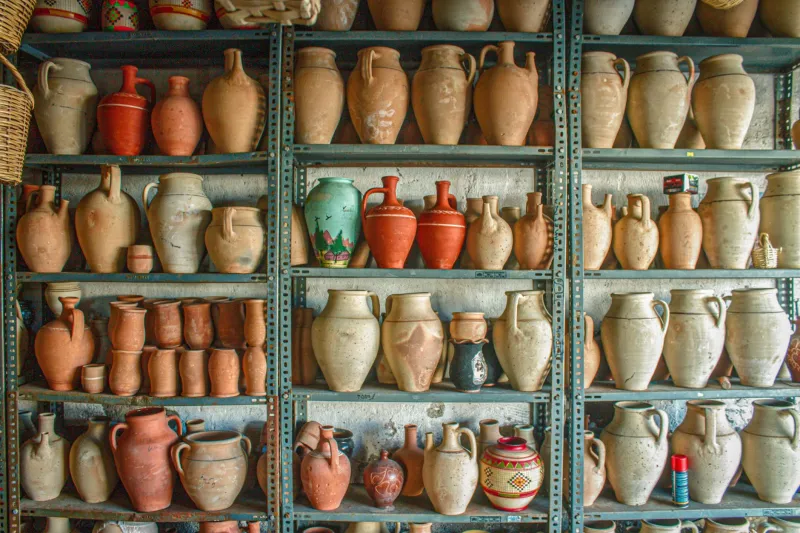
There's a particular kind of paralysis that sets in when you own something truly beautiful. You know the feeling — you buy a jacket so nice you're afraid to wear it in the rain, or a bottle of whiskey so rare it sits on the shelf for years waiting for an occasion worthy of opening it. Now imagine that feeling, but the object in question was literally designed to hold beer.
Welcome to the collector's curse of the perfect stein.
For a growing community of craft beverage enthusiasts across the US, steins have crossed a line — from functional drinkware into genuine art objects. And once that line gets crossed, pouring a cold IPA into a hand-thrown, hand-painted, limited-edition ceramic vessel starts to feel less like enjoying a beer and more like a small act of vandalism.
When Functional Becomes Fine Art
Ask Marcus Delray, a 47-year-old collector from Portland, Oregon, about his most prized piece — a hand-thrown stoneware stein commissioned from a local ceramicist, featuring a relief landscape of the Columbia River Gorge — and he'll describe it the way most people describe a painting.
"I know it's a drinking vessel. Intellectually, I know that," he says, laughing. "But I've had it for three years and I've never once put beer in it. It sits on a dedicated shelf under a little spotlight. My wife thinks I've lost my mind."
He hasn't lost his mind, exactly. He's just caught in a tension that's older than craft brewing itself — the push and pull between an object's utility and its cultural or aesthetic value. Steins, with their centuries-long history and their natural canvas for artwork, are uniquely vulnerable to this dynamic.
The functional design of a great stein — the heft, the insulating walls, the satisfying lid mechanism — is also what makes it a compelling sculptural object. The very qualities that make it excellent for drinking are the same qualities that make it feel permanent, significant, and worth preserving.
The Psychology of the Display-Only Piece
Dr. Rachel Simms, a consumer psychologist based in Chicago who studies collector behavior, has a name for what Marcus is experiencing: "ownership anxiety."
"When we acquire something we perceive as rare or irreplaceable, the brain starts treating it differently than ordinary objects," she explains. "Using it introduces risk — the risk of damage, of diminishment, of the thing becoming ordinary through familiarity. The display shelf is a protective response. It's how we keep something special.'"
But there's an irony baked into that protection. A stein on a shelf, however beautifully lit, is a stein in exile. It exists in a kind of suspended animation — honored but unfulfilled. The object was made to hold something, to be held, to be raised and set down and raised again. Keeping it behind glass is, in a very real sense, keeping it from being what it is.
Collector Denise Hartwell of Austin, Texas, has wrestled with this for years. She owns over sixty steins, ranging from mass-market Oktoberfest pieces she picked up for a few dollars to hand-engraved pewter lids she had custom made for ceramic bodies she sourced from a studio in Vermont.
"I have maybe a dozen I actually drink from," she says. "The rest are display. And I've made peace with that — mostly. But every now and then I'll pick one up to dust it and think, this thing wants to be used. You can almost feel it."
How Craft Breweries Are Playing Into the Obsession
Smart breweries have noticed this collector mentality and are leaning into it hard. Limited-edition taproom steins, numbered releases, artist collaborations, seasonal pieces tied to specific beer drops — these aren't just merchandise strategies anymore. They're designed to straddle the line between souvenir and collectible, between memento and artwork.
The calculus is clever: a stein that feels collectible generates buzz, commands a higher price point, and keeps the brewery's name on a shelf in someone's home indefinitely. It's marketing that doubles as fine craft.
Some breweries are going further, partnering with regional artists and ceramicists to produce genuinely limited runs — sometimes as few as twenty or thirty pieces — that come with certificates of authenticity and provenance cards. At that point, the stein has fully crossed into fine art territory, and the brewery knows it. The beer is almost beside the point.
"We sold a run of twelve hand-thrown steins last fall in about forty-five minutes," says one taproom manager at a small Pacific Northwest brewery who asked not to be named. "I think maybe two of those people actually intended to drink from them. The rest were collectors. And honestly? That's fine with us. They're still ambassadors for what we do."
Finding the Balance: A Few Honest Suggestions
If you're a collector staring down this particular dilemma, a few practical thoughts from people who've been there:
Designate drinkers and displayers from the start. When you acquire a new piece, decide immediately whether it's a display stein or a drinking stein. Trying to make that decision later — when you've already grown attached — is where the paralysis sets in. Buy two if you love the design: one to use, one to keep pristine.
Accept that use is a form of honor. A stein that's been filled and raised and clinked against another stein has a story. Patina isn't damage — it's biography. Some collectors deliberately use their finest pieces precisely because they believe the object deserves to fulfill its purpose.
Create a rotation. Denise rotates her "active" steins seasonally, giving each one a few months of regular use before returning it to display. It's a compromise that lets her maintain a connection to pieces she loves without risking her most irreplaceable items.
Know your limits. There are some steins that genuinely shouldn't be used — antique pieces with fragile glazes, museum-quality historical artifacts, anything you couldn't bear to lose. Give yourself permission to protect those without guilt.
The Stein Is Still a Stein
At the end of the day, the tension between preservation and use is a good problem to have. It means the craft has gotten good enough — the artistry deep enough, the materials fine enough — that people are treating drinking vessels with the same reverence once reserved for oil paintings and sculpture.
That's a remarkable thing. And it says something real about where craft brewing culture has arrived in this country: a place where the glass you drink from can be as considered, as intentional, and as meaningful as what's inside it.
Just maybe don't tell your stein it's too beautiful to be used. It might take offense.